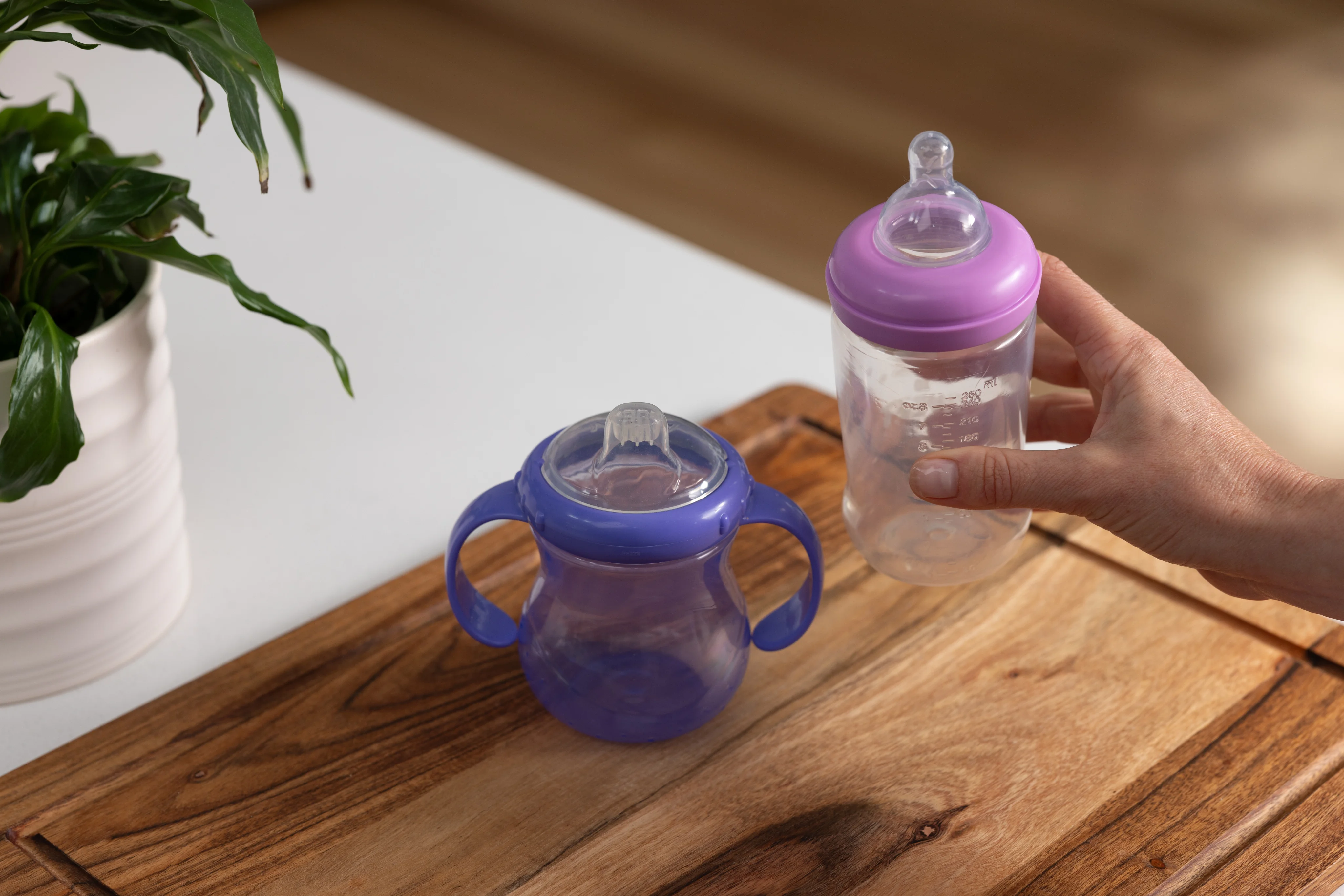
Babies can’t speak, but they’re brilliant communicators. Learning to read your child’s hunger and fullness cues helps prevent over or under feeding, supports healthy self regulation, and may even set the stage for lifelong eating habits. This evidence based guide explains what to look for, how to respond, and when to seek professional advice.
Need a refresher on safe mixing? See How to Prepare Infant Formula Safely or watch our 1 min 20 s video tutorial (opens in new tab).
Why Cues Matter
Research shows infants who are fed responsively—meaning parents follow hunger and satiety cues—have lower odds of rapid weight gain and may develop healthier appetite control later in childhood.¹ Responsive feeding is also a core pillar of the WHO Ten Steps to Successful Breast feeding and is equally important when formula feeding.
Hunger Cues: Early, Active & Late
| Stage | Visual Care | What It Means | What It Means |
| Early | Eyes closed, mouth opening, light stretches | “I feel a bit hungry.” | Prep bottle or position for breastfeed |
| Active | Rooting, hand to mouth, lip smacking, soft coos | “Feed me soon, please.” | Begin feeding |
| Late | Crying, body tense, colour change | “I’m very hungry and upset.” | Calm first (skin‑to‑skin, rocking) then feed |
Did you know? (Placeholder heading)
Rooting Reflex - A newborn turns head towards a touch on the cheek, opening the mouth—an instinctive sign of hunger.

Fullness Cues: Knowing When to Stop
Research shows infants who are fed responsively—meaning parents follow hunger and satiety cues—have lower odds of rapid weight gain and may develop healthier appetite control later in childhood.¹ Responsive feeding is also a core pillar of the WHO Ten Steps to Successful Breast feeding and is equally important when formula feeding.
Honouring fullness cues is as important as recognising hunger—over feeding can disturb natural satiety signalling.Dr Laura Nguyen, APD
| Cue | Interpretation | Action |
| Turns head away | “I’m satisfied.” | Large pot |
| Relaxes hands / opens fists | Comfortable & full | Counter-top unit |
| Sealed lips / pushes teat | Doesn’t want more | Microwave + bag |
| Falls asleep | Satiety or fatigue | Sterilising bucket + tablet |
How to Respond Responsively
1. Position comfortably - Keep baby semi upright; support head & neck.
2. Maintain eye contact - Enhances bonding; helps spot subtle cues.
3. Paced bottle feeding - Hold bottle horizontally; allow pauses every 20–30 s.²
4. Burp mid feed - Especially if baby squirms or arches.
5. End at first fullness cue - Don’t encourage “finishing the bottle”.
Paced Feeding FAQ
Why horizontal, not vertical?
Lorem
How long should a feed last?
Lorem
When Cues Change: Growth Spurts & Developmental Leaps
Expect feeds to cluster for 2–3 days; cues usually revert when the spurt ends.
| Age | Typical Spurt | Temporary Cue Changes |
| 3 weeks | Rapid weight gain | More frequent active cues, shorter intervals |
| 6 weeks | Neurological leap | Cluster feeding, restless sleep |
| 3 months | Motor development | Increased hunger + distraction mid feed |
| 6 months | Starting solids | Subtle hunger cues; interest in spoons |
Troubleshooting Common Concerns
| Symptom | Typical Spurt | Temporary Cue Changes |
| Always finishing bottle + searching | Flow too slow; true hunger | Try faster teat; assess volumes |
| Frequent spit-ups after cues end | Over-feeding or reflux | Stop at first fullness cue; consult GP |
| Hard to wake for feeds | Illness, jaundice, under-feeding | Seek medical review immediately |
Breastfeeding Reminder
Breast milk is best for babies. The a2 Milk Company® supports exclusive breastfeeding for the first six months and continued breastfeeding for as long as mother and child desire. Responsive cue based feeding applies to breast and formula fed infants alike.
Need personalised guidance?
Call our a2™ Careline — Free, Monday to Friday, 8 am – 5 pm AEST
References
- DiSantis K et al. Responsive feeding and infant weight outcomes. Childhood Obesity 17(4) (2021): 256 264.
- Brown A & Lee M. Paced bottle feeding: a systematic review. Maternal & Child Nutrition 11(4) (2015): 454 470.
- World Health Organization. Ten Steps to Successful Breast feeding (2020).
Editorial & Privacy Links
Share