
What makes
a2 Milk® special?


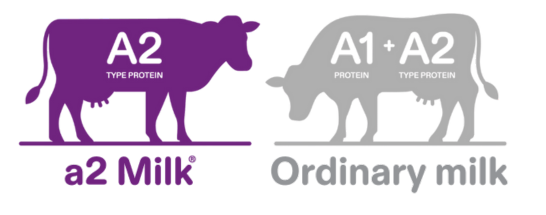
Unlike ordinary milk, a2 Milk® naturally contains only A2-type beta-casin protein. This means a2 Milk® may be easier on digestion than ordinary milk for some milk-intolerant individuals when enjoyed as part of a healthy, varied diet.
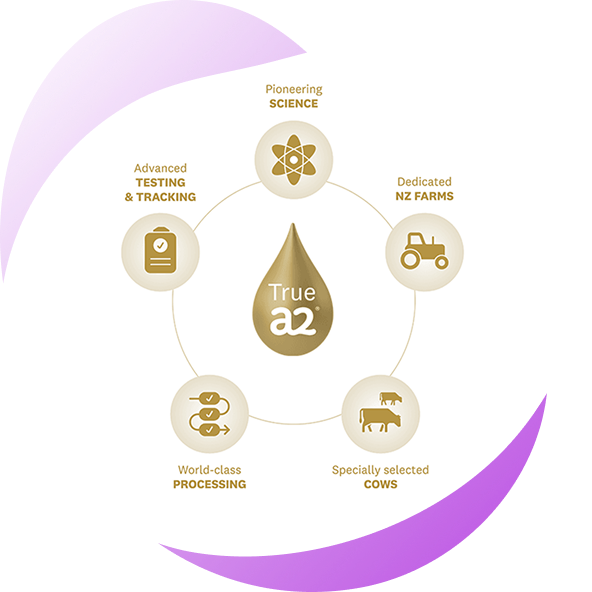
True a2® represents over 25 years of experience and an in-depth understanding of A1 and A2-type beta-casein proteins.
Our True a2® ecosystem helps ensure that, from our partner farms to your family, a2™ products reach you in premium condition.
a2 Milk® is pure and natural dairy milk. But unlike ordinary dairy milk, a2 Milk® is sourced from cows that that have been genetically tested to confirm that they naturally produce only A2-type protein milk. As a result, a2 Milk® has all of the goodness of dairy milk, but is naturally A1 protein free.
Dairy milk contains two main groups of proteins: casein and whey. Beta-casein is a form of casein protein typically making up about 30% of the total protein content. Whilst there are at least 12 genetic variants of beta-casein in cows’ milk they can all be divided into two main types: A1 and A2-type based on their structure and subsequent digestion.
A2 protein is recognised as the original variant of beta-casein protein in domesticated cattle from which A1 protein and other beta-casein protein types subsequently arose through genetic mutation, a natural process which can lead to small differences (such as hair and eye colour in humans), and over time drives evolution.
The milk we use comes from cows that have been specially selected to naturally produce milk with only A2-type beta-casein protein.
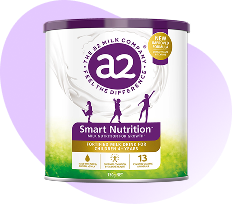
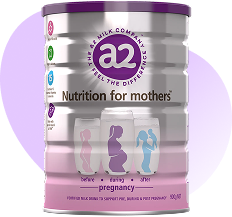

Our a2™ Careline is supported by Accredited Practising Dietitians ready to help answer your questions.
Phone: 1800 22 46 32 (8:00 am to 8:00 pm AEST)
Email: careline@a2milk.com
We believe breastfeeding is best to provide ideal nutrition for babies, and other important health benefits. Good nutrition for mums is important throughout pregnancy and whilst breastfeeding. However, we understand breastfeeding may not be an option for everyone. To support you on your feeding journey, we recommend speaking to a healthcare professional. Introducing formula either partially or exclusively may reduce breast milk supply, which isn’t easy to re-establish. It is also important to consider the social and financial impacts of formula, such as potential cost of providing formula until your baby is 12 months old. When using infant formula, always follow the preparation instructions carefully. Improper use can make your baby unwell. Information about our infant formula products is for educational and informational purposes only.
