- Why a2™
- Our Story
The a2 Milk Company Story
The a2 Milk Company was founded in New Zealand in 2000 by scientist Dr. Corrie McLachlan and his business partner, Howard Paterson.
Built on the knowledge that not all milk is the same, our founders recognized the potential for a2 Milk® to help more consumers enjoy the nutritional goodness of dairy.

Ongoing scientific discovery
The a2 Milk Company are global leaders in beta-casein protein science.
For over 25 years we have worked alongside scientists from around the world to pioneer the scientific understanding of the unique benefits of A1 protein free milk.

What is a2 Milk®?
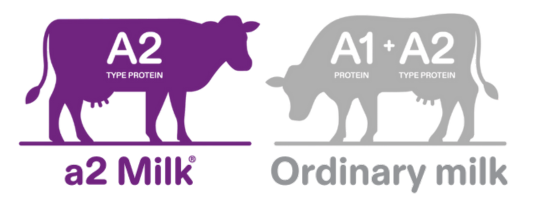
Unlike ordinary milk, a2 Milk® naturally contains only A2-type beta-casin protein. This means a2 Milk® may be easier on digestion than ordinary milk for some milk-intolerant individuals when enjoyed as part of a healthy, varied diet.
Sustainability and Community
The a2 Milk Company's purpose ‘We pioneer the future of Dairy for good’ and vision ‘An A1-free world where Dairy nourishes all people and our planet’ highlights the positive impact we want to have on the world, inspiring our team and partners.
FAQ’s
What is a2 Milk®?
a2 Milk® is pure and natural dairy milk. But unlike ordinary dairy milk, a2 Milk® is sourced from cows that that have been genetically tested to confirm that they naturally produce only A2-type protein milk. As a result, a2 Milk® has all of the goodness of dairy milk, but is naturally A1 protein free.
What is beta-casein protein?
Dairy milk contains two main groups of proteins: casein and whey. Beta-casein is a form of casein protein typically making up about 30% of the total protein content. Whilst there are at least 12 genetic variants of beta-casein in cows’ milk they can all be divided into two main types: A1 and A2-type based on their structure and subsequent digestion.
Why are there different beta-casein protein types?
A2 protein is recognised as the original variant of beta-casein protein in domesticated cattle from which A1 protein and other beta-casein protein types subsequently arose through genetic mutation, a natural process which can lead to small differences (such as hair and eye colour in humans), and over time drives evolution.