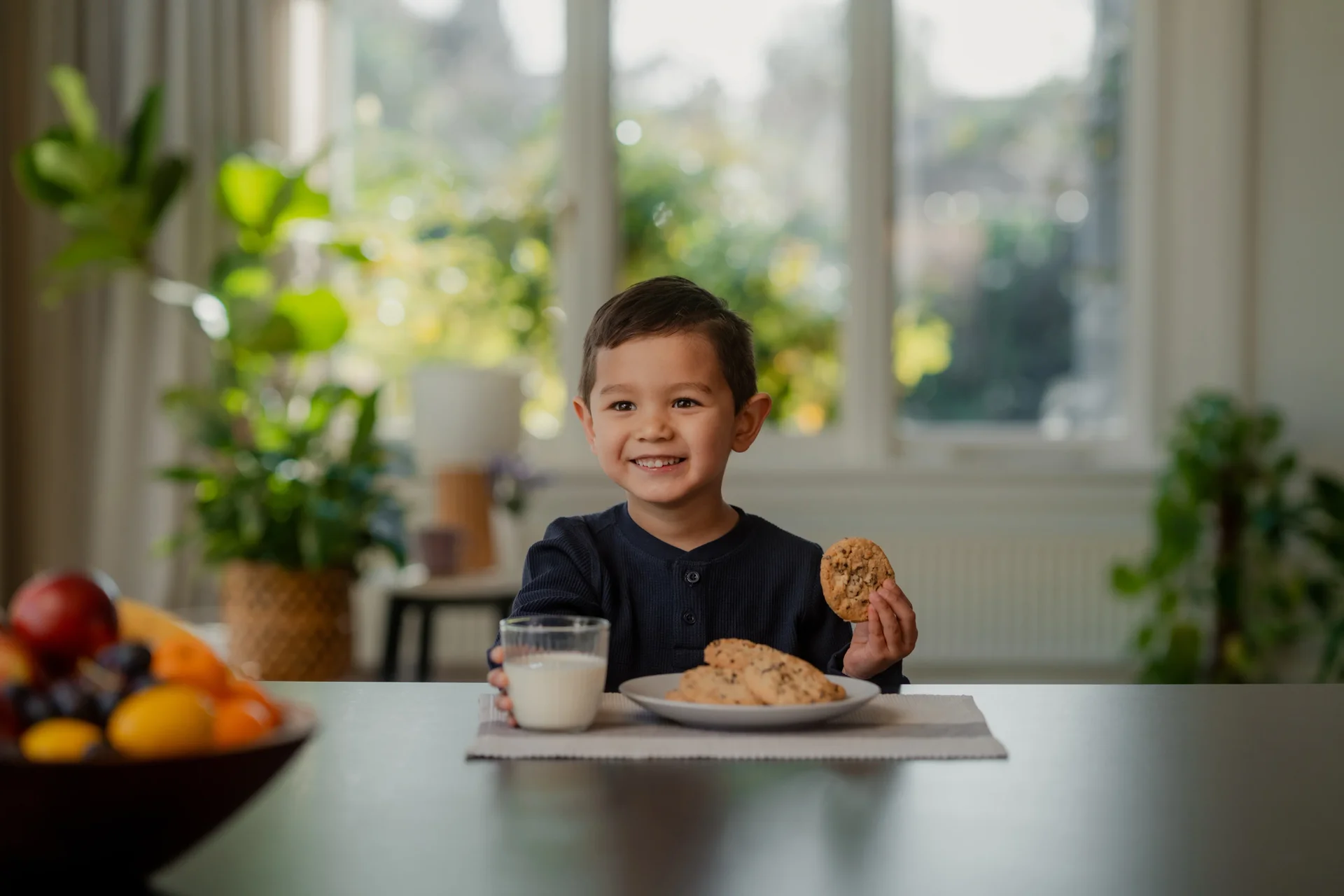
Fussy eating is common among toddlers and young children and is often considered a normal part of their development. The good news is – children usually become less fussy as they grow older.
Fussy eating is when a child exhibits reluctance and preference towards certain foods, resulting in a limited diet. It often surfaces between 2 and 3 years old, and can be very frustrating for parents, especially when a child continually refuses foods.
This article will cover how to support your child’s eating patterns and create positive mealtimes to support children, encourage food diversity and make mealtimes easier for everyone.
Why are some toddlers fussy eaters?
There’s a range of reasons why a toddler may be a fussy eater, and often it is a natural stage of toddlerhood.
- In toddlerhood, children can start to exert their independence, including by choosing what to eat. They also begin to develop personal preferences.
- Some children may have natural sensitivities towards certain tastes and textures, so it can take a while for them to accept new foods.
- Children’s appetites can vary, depending on their growth and how much physical activity they are doing.
Positive mealtimes can help with fussy eating
Creating a positive mealtime experience can encourage toddlers to explore new foods. Try these strategies in a mealtime routine to see if they make a difference.
- Eat together as a family, this is a great opportunity for you to role model eating the food and showing how you enjoy them.
- Use encouraging words to create a positive eating environment. You don’t need to force your child to eat, and it’s even okay if they don’t eat it all.
- Avoid distractions at mealtimes, such as screens or toys.
Exploring different foods
It can take 10-15 tries (or even more) for children to become familiar with new foods. Giving your child the freedom to feed themselves, decide what and how much they will eat is important during this stage.
- Make mealtimes fun with a range of colours and shapes!
- Try to include a food you know your toddler likes alongside something they haven’t tried yet. If they don’t like a food, that’s okay - you can try again another day.
- Offer a few options and ask your toddler which one they would prefer.
- Offer foods in a variety of ways, such as broccoli steamed, in an omelette, or used in a pasta meal.
- Allow for mess, let your child explore and play with food as they learn to eat.
If you have any concerns about your toddlers fussy eating, consult your child’s treating healthcare professional or a dietitian for individualised advice. It’s also important to know that resistant eating is different from typical fussy eating and may require more specialised support, see Fussy eaters vs. resistant eaters, for more information.
What to feed a fussy toddler?
A toddler’s tummy is small so offer your toddler smaller portions, more often. Offering nutrient dense meals and snacks to your fussy toddler is key. See these below fun finger foods and snack options you could trial with your fussy toddler!
Crunchy Fish Fingers (p.32)
DIETITIAN TIP: This yummy recipe offers protein and essential fats for your little one. Serve with peas and mashed potatoes to get some extra veggies. This super simple breading is made up of only breadcrumbs and plain flour!
Tuna Beach Balls (p.30)
DIETITIAN TIP: Tuna is a source of protein and healthy omega-3 fats. Serve with a fun dip that your child already enjoys, such as chickpea dip (hummus) or a little tomato sauce. You could even get your little one involved in the cooking, by letting them help to roll up the beach balls!
Banana-Rama Shake (p.43)
DIETITIAN TIP: This yummy smoothie uses a2 Platinum® Premium toddler milk, which is a milk drink designed to provide nutritional support where needed alongside a healthy, varied diet. You can also substitute for full cream milk e.g. a2 Milk® Full Cream. Smoothies are a great way to trial new flavours with your little one, try adding an extra fruit such as mango, strawberries or pineapple to this recipe!
Key takeaways
- Navigating fussy eating can be challenging for parents and carers, but with patience and these tips, you can encourage your toddler to widen their food choices to support healthy eating habits into childhood.
- Every child is unique and creating a positive mealtime is important to support to their feeding journey.
- If you are worried that your child is not growing properly, is only eating a very small range of foods, or if they won’t eat entire group groups for longer than a few weeks, contact your GP or a dietitian for individual support.
When do toddlers stop being fussy eaters?
The timeline for growing out of picky eater behaviour is different for every child. By the age of 5 or 6, most children are willing to try new foods. Some get there much faster, and others take longer.
Why is it important to introduce different textures, flavours and colours?
Offering toddlers a variety of age appropriate textures, flavours and colours, and doing so regularly, can help them become more accepting of new foods. Seeing, touching and smelling different foods supports their sensory comfort, which may reduce fussiness over time.
Providing variety also helps toddlers learn to enjoy a broader range of foods as they grow. Exposure to different foods from around 6 months of age may lower the risk of picky eating later in toddlerhood.
If your toddler is struggling with feeding challenges, it may be helpful to seek support from a healthcare professional experienced in childhood feeding.
How can I prepare food for a fussy eater toddler?
- Get your child in the kitchen: Whether it is baking, cooking, learning about the ingredients, picking herbs from the garden or just being in the kitchen while you cook, children are more likely to eat meals that they prepare or help prepare.
- Make food fun and appetising: A picky eater isn’t just thinking about taste. Colours and shapes are the first things a toddler will notice. Make food fun by arranging sliced fruits in the shape of a smiley face on a plate. Use cookie cutters to shape sandwiches and vegetables into hearts, stars or animals.
- Keep the plate simple: Large amounts of food can overwhelm a toddler and cause them to refuse to eat anything. Make it easy to see everything that is on the plate.
- Prepare familiar food on the same plate when introducing a new food: Serving new foods alongside their favourites can reduce the caution-response that adds to fussiness.
- Offer foods that you dislike: Your picky toddler might actually like the foods you are fussy about. Don’t like brussels sprouts? Maybe your child will love them!
- Prepare foods differently: For example, baking broccoli gives it a different taste and texture to steaming, boiling or stir frying.
How can I deal with a fussy eater toddler during mealtime?
Mealtimes with a picky eater can be stressful to say the least. Easier said than done — but we have some tips on how to keep things calm and even fun:
- Division of responsibility: This is a method that encourages toddler independence. It’s your role to provide the food, while your child will decide how much they eat of that food.
- Be a role model: Your child’s willingness to experiment with new foods will depend partly on their environment, so try to remain calm. Your toddler is likely to copy your behaviours, so aim to eat a wide variety of foods around them.
- Social time: Mealtimes are a chance for your picky eater to witness others eating a variety of foods, develop social skills, and a healthy relationship with food. Eat together and with friends and family as much as possible.
- Keep mealtime short: Remember, the key is to prevent overwhelming your fussy eater. Creating scheduled eating events will help punctuate the day and provide some predictability. Set a time limit for each meal and snack (20 minutes is ideal) and stop offering food once the mealtime is over – you can offer more food at the next eating event.
- Stay calm and don’t buy in: If toddlers receive attention from their picky eating behaviours, they’ll be more likely to repeat them. It’s essential to hide your frustration, and instead focus your attention on your toddler’s good behaviours and celebrate their breakthroughs.
- Let your fussy eater pick at your plate: Served them the exact same thing you’re eating? It can still be more exciting and adventurous for them to eat from your plate. Even better, they might pick at something they’ve never tried before.
For more mealtime strategies for your picky toddler, see the Better Health Channel website.
References:
- Guidelines for Fussy Eating. Nutrition Education Materials Online, Queensland Government; 2023. Accessed 30 Jan 2026.
- Fussy eating: what to do. Raising Children Network (Australia) Limited; 2025. Accessed 30 Jan 2026.
- Fussy eating in toddlers and children. Pregnancy Birth and Baby; 2023. Accessed 30 Jan 2026.
Disclaimer: The information provided in this article is for general informational purposes only and is not intended as medical advice. Always seek the guidance of a qualified healthcare professional (HCP) with any questions you may have regarding a medical condition or health-related decisions.
Share