There’s no single approach to feeding that suits every baby or family. If you’re considering formula, it helps to understand how baby formulas are regulated in Australia, what the different options are and how to choose one that suits your baby’s age and feeding needs.
While breastfeeding is recommended as the best source of nutrition for infants, there are times when families may consider introducing infant formula. This guide explains what baby formula is, how formulas differ by stage and type, and what to consider when choosing and preparing formula. Whether you’re formula feeding from birth, combination feeding or making a change along the way, the information below will help you make confident feeding decisions.
Prior to introducing infant formula for the first time, a healthcare professional should be consulted. Healthcare professionals are best placed to support women, especially those who wish to continue breastfeeding either fully or partially. They can do this in a number of ways including navigating feeding challenges, discussing techniques to protect and maintain supply and can provide direction to services that provide information on the right to breastfeed at work and in public places.
Key takeaways
- All infant formulas sold in Australia meet strict government-regulated safety and nutrition standards.
- Formula is the only safe alternative to breastfeeding
- Stage 1 and Stage 2 formulas are designed for different ages, but not all babies need to make the change from stage 1 to stage 2.
- Higher price doesn’t mean higher quality—suitability is what matters most.
- Correctly preparing and storing formula is essential for safe feeding.
- Ongoing feeding concerns should be discussed with a healthcare professional.
- It is recommended to seek healthcare professional advice before introducing infant formula for the first time
What is baby formula?
Baby formula is a milk-based feed designed to support babies when breastmilk isn’t being used, either in full or as part of combination feeding. It’s developed to provide the essential nutrients babies need to support normal growth and development during their first year of life.
Infant formula is different from other types of milk. Babies under 12 months shouldn’t have cow’s milk as their main drink, as it doesn’t provide the right balance of nutrients for infants and may affect iron levels. Infant formula is specifically designed for babies, with a nutrient profile that suits their developing digestive systems. specifically designed for babies, with a nutrient profile that suits their developing digestive systems.
In Australia, all infant and follow on formula products are regulated under the Australia New Zealand Food Standards Code. These regulations set requirements for nutritional composition, safety and labelling, helping ensure that approved formulas are suitable for infant feeding when prepared and used as directed.safety and labelling, helping ensure that approved formulas are suitable for infant feeding when prepared and used as directed.
What’s the difference between breastfeeding and formula feeding?
Breastfeeding has non-nutritional benefits that are not replicated by infant formula for mothers and infants, and it is important to speak to a healthcare professional and take these into consideration before using an infant formula.
Breastmilk and infant formula both support babies’ growth and nourishment, but they do so in different ways. Breastmilk naturally changes over time to meet a baby’s needs. It contains antibodies and other bioactive components that support immune development, and its composition can vary across feeds and stages of lactation.
Infant formula, by contrast, has a consistent composition and is designed to provide essential nutrients in measured amounts when prepared according to instructions.
How babies are fed can look different from one family to the next. There are many benefits of breastfeeding and some families breastfeed exclusively, while others use formula from birth and many choose combination feeding at various stages. Feeding decisions are personal and may change over time, influenced by individual circumstances, wellbeing and what works best for both baby and parent.
When might families choose to use infant formula?
Formula feeding may be the right choice for many families, and there are lots of valid reasons why parents choose it. Some use formula because of medical considerations, low milk supply, difficulty breastfeeding, returning to work or study, or the need for shared feeding responsibilities. Others choose formula because it supports their own wellbeing, mental health or family balance — all of which are important parts of caring for a baby.
Formula can be introduced in different ways. Some families use it alongside breastfeeding from the start, while others transition gradually or move to exclusive formula feeding over time. Some parents use formula sparingly and continue to prioritise breastfeeding. There’s no single “right” approach. What matters most is finding a feeding routine that works for both you and your baby.
If you’re unsure how to make changes to feeding, or if you have concerns about reflux, unsettled behaviour or how your baby is responding, it’s a good idea to speak with a GP, child health nurse or midwife.
Types of baby formula
Different types of baby formula are available to suit a range of feeding needs. All formulas sold in Australia are regulated, but some options are designed for specific situations and should be chosen with professional guidance.
- Milk-based baby formula: The most common option, made from cow’s milk that’s been modified to be suitable for infants.
- Soy-based baby formula: Uses soy protein instead of cow’s milk and is generally recommended only under the advice of a healthcare professional.
- Hypoallergenic baby formula: Includes extensively hydrolysed or amino acid-based formulas for diagnosed allergies, used under medical supervision.
- Specialised baby formulas: Designed for specific medical needs, such as reflux management, and should be used with professional advice.
Baby formulas available in Australia
Baby formulas in Australia are grouped by stage to align with your baby’s age and nutritional needs:
- Stage 1 or starter formula: Suitable from birth to around 6 months and can be used as a sole source of nutrition. Stage 1 formulas can also be used through to 12 months, alongside the introduction of solid foods after 6 months if preferred.
- Stage 2 or follow on formula: Intended for babies around 6–12 months, as part of a more varied diet that includes age-appropriate solid foods. Switching from Stage 1 to Stage 2 formula isn’t always necessary unless advised by a healthcare professional.
- Specialty formulas: Products developed for specific feeding needs, including special medical purpose formulas. These should only be used with guidance from a healthcare team.
Choosing the right formula for your baby
Start by choosing formula that’s appropriate for your baby’s age. Stage 1 formula can be given from birth and Stage 2 formula can be given from six months. However, not all babies need to change from Stage 1 to Stage 2 formulas unless advised by a healthcare professional.
Practical considerations matter too. Selecting a formula that fits your budget, availability and daily routine can help make feeding more sustainable over time. A formula that’s consistently accessible and affordable is often a better choice than one that’s difficult to source.
If your baby shows ongoing feeding discomfort, frequent reflux, unsettled behaviour or signs of allergy, it’s important to seek advice from a GP, child health nurse or paediatrician before switching formulas. Some symptoms can have multiple causes and changing formulas without guidance may not address the underlying issue.
When choosing baby formula, consider:
- Your baby’s age and development stage
- Practical factors like cost and availability
- Advice from a healthcare professional if concerns arise
How to safely prepare formula and feed your baby
Safe preparation is essential when formula feeding because correct hygiene, accurate measuring and appropriate storage all help reduce the risk of contamination and make sure your baby receives the correct nutrition at every feed.
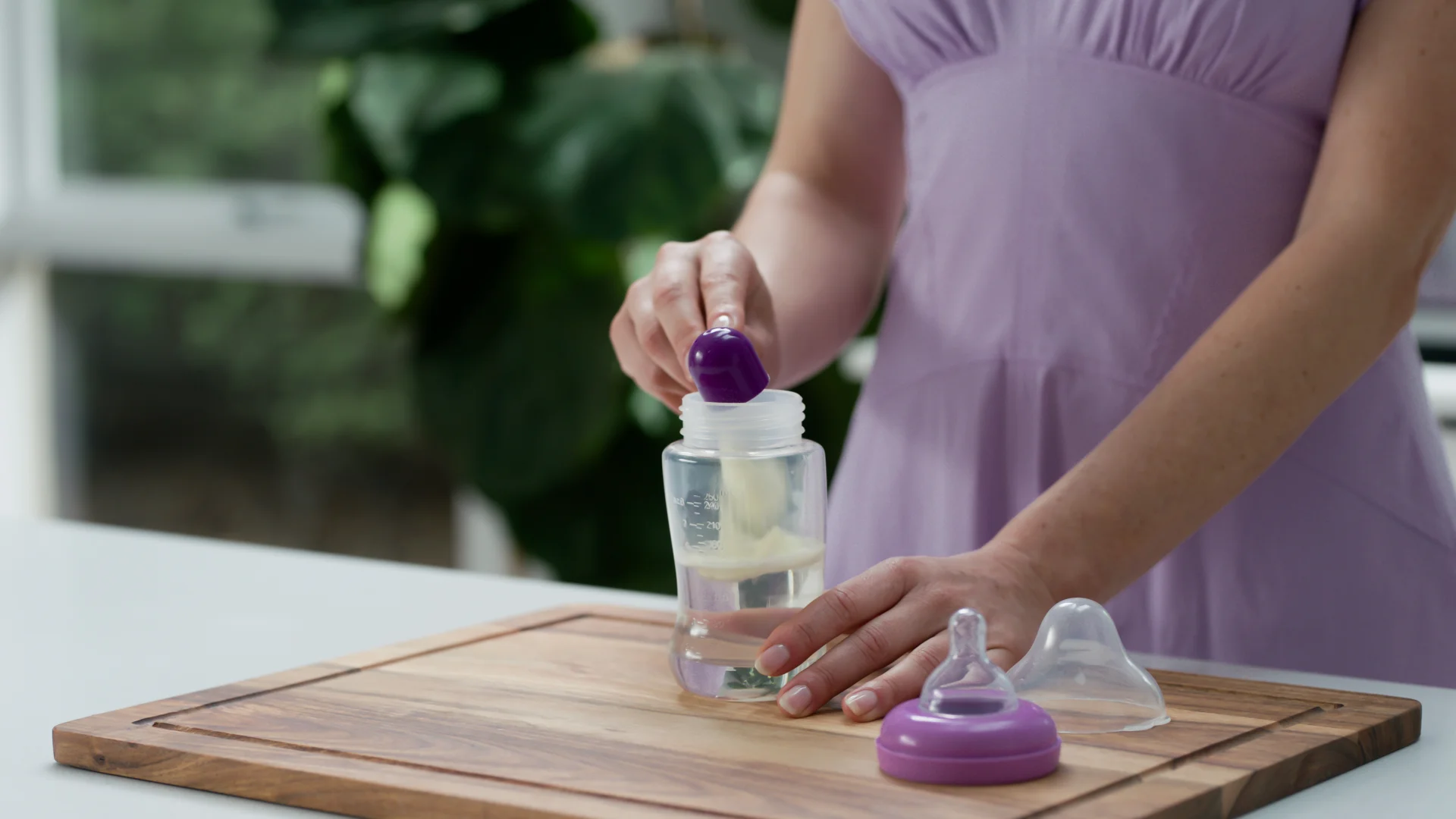
Before preparing formula, wash and dry your hands thoroughly and ensure all feeding equipment is clean. Bottles, teats and caps should be properly washed and sterilised. Always follow the preparation instructions on the formula tin exactly. This includes using the scoop provided, levelling each scoop carefully and measuring the correct amount of water. Adding too much or too little powder can affect the nutritional balance of the feed.
Always used cooled boiled water
Watch for hunger and fullness cues while feeding your baby, rather than aiming for a fixed volume at every feed. Once a feed has started, any remaining formula should be discarded within one hour to reduce the risk of bacterial growth.
For step-by-step guidance, visit our bottle feeding guide.
Discover the best formula for your baby
Choosing how to feed your baby is a personal decision and the right approach is the one that supports your baby’s needs and your family’s routine.
If you have questions, our experienced team and Accredited Practising Dietitians are here to help. Contact the a2™ Careline to learn more.
Baby formula FAQs
How do I know which formula is safest for my baby?
For most babies, formula is safe if it’s approved for sale in Australia, appropriate for their age and prepared according to the instructions on the tin. If your baby has specific medical needs, was born prematurely or shows ongoing feeding concerns, it’s important to ask for advice about formula from a GP, child health nurse or paediatrician.
What formula is recommended for babies with reflux or colic?
There isn’t one single formula that’s right for all babies with reflux or colic-like symptoms. These symptoms can have many causes and some babies may benefit from changes in feeding technique or routine rather than a different formula. In some cases, a healthcare professional may recommend a thickened or specialised formula. If reflux, distress or feeding difficulties persist, it’s best to seek medical advice before changing formulas.
How do I read baby formula labels in Australia?
Start by checking that the formula is suitable for your baby’s age or stage (such as Stage 1 from birth or a Stage 2 follow on formula for older babies from 6 months). Next, carefully read the preparation instructions, including water amounts and scoop measurements. Ingredient lists and allergen information can also be helpful, particularly if your baby has known sensitivities.
Feeding recommendations can vary by brand, so it’s best to focus on suitability, preparation guidance and advice from healthcare professionals.
Can I use cow’s milk as a substitute for formula?
No. Cow’s milk isn’t suitable as a main drink for babies under 12 months and shouldn’t be used instead of breastmilk or infant formula. It doesn’t provide the right balance of nutrients for human infants, may place stress on their kidney function and may affect iron levels with prolonged use.
If you’re unsure what to feed your baby or are temporarily out of formula, seek advice from a healthcare professional as soon as possible.
Can my baby have formula if they have a milk protein allergy?
Babies with a diagnosed cow’s milk protein allergy can usually still be formula fed, but they’ll need a clinically appropriate hypoallergenic formula recommended by a healthcare professional. Standard cow’s milk-based formulas aren’t suitable in these cases. If you suspect an allergy, seek medical advice immediately.
What formula is best for babies with lactose intolerance?
True lactose intolerance is uncommon in babies and if it presents, generally does so temporarily following a gastrointestinal illness. Symptoms can overlap with other feeding issues and for this reason, it’s important to speak with a healthcare professional if you notice symptoms or want to consider a change in formula. Your health team can help determine whether lactose intolerance is the cause of your baby’s symptoms or whether another feeding approach is more appropriate.
How can I safely store baby formula?
The safest option is to prepare formula fresh for each feed whenever possible. If you need to prepare feeds in advance, follow the storage instructions on the formula tin and keep prepared bottles refrigerated. Any unfinished formula should be discarded within one hour to reduce the risk of bacterial growth.
Where can I buy baby formula in Australia?
Baby formula is widely available in Australia through supermarkets, pharmacies and online retailers. When purchasing formula, choose products intended for the Australian market and suitable for your baby’s age.
Share